Custom Manufacturing ERP Software Built for One Factory, Not a Thousand
Off-the-shelf ERP forces the factory to work the way the software thinks. We built the inverse — including a phone system that knows which order is being discussed.
The client had outgrown spreadsheets and had rejected off-the-shelf ERP twice. The reason is familiar to every mid-size manufacturer: generic ERP forces the factory to work the way the software thinks, instead of the software working the way the factory runs. Licensing costs scaled per seat. Modules they'd never use came bundled, while the modules they actually needed — their specific task allocation logic, their specific PO approval chain — didn't exist. Meanwhile work was fragmenting across systems. Orders lived in email. Inventory lived in a spreadsheet that was accurate on Mondays. Task assignment happened verbally. And customer calls happened on a phone system that knew nothing about the order being discussed.
We modelled the platform on the client's actual operating process rather than a vendor's template. That meant encoding the task allocation logic and approval chains they had built over years instead of overwriting them, and treating the telephony system as part of the ERP rather than a tool sitting beside it. Floor operators, supervisors, procurement, accounts and management were each mapped as first-class users with their own surface.
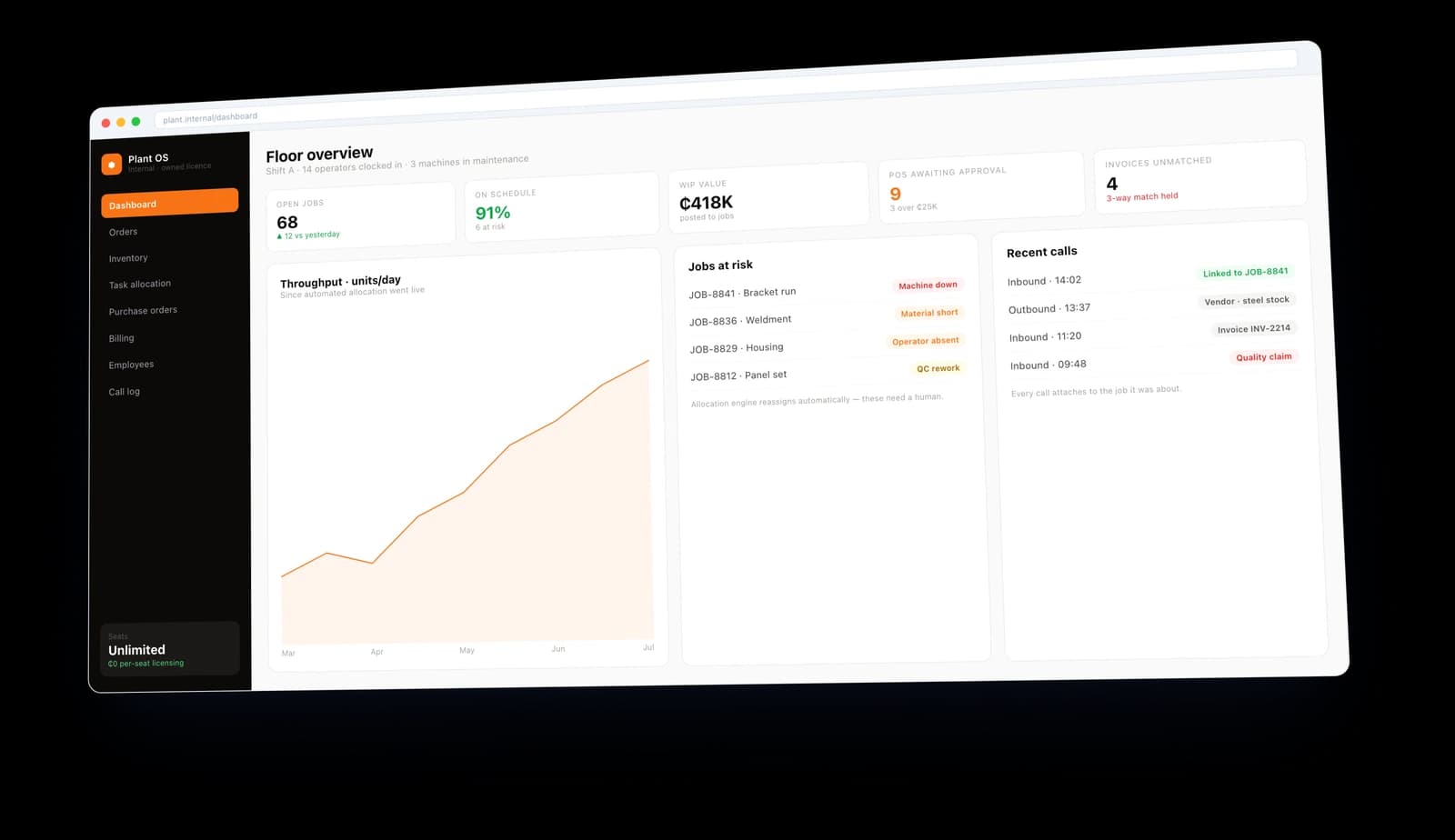
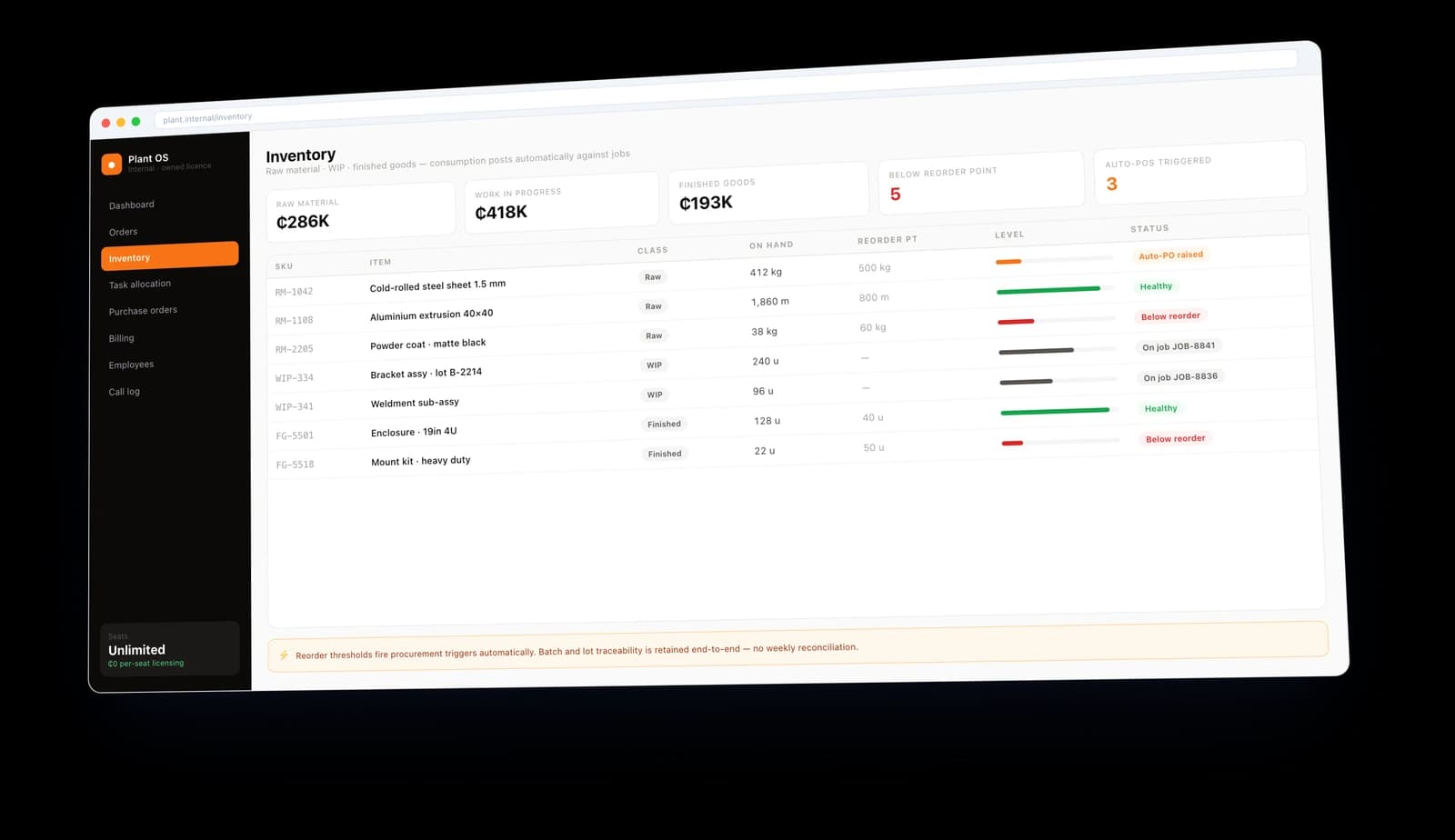
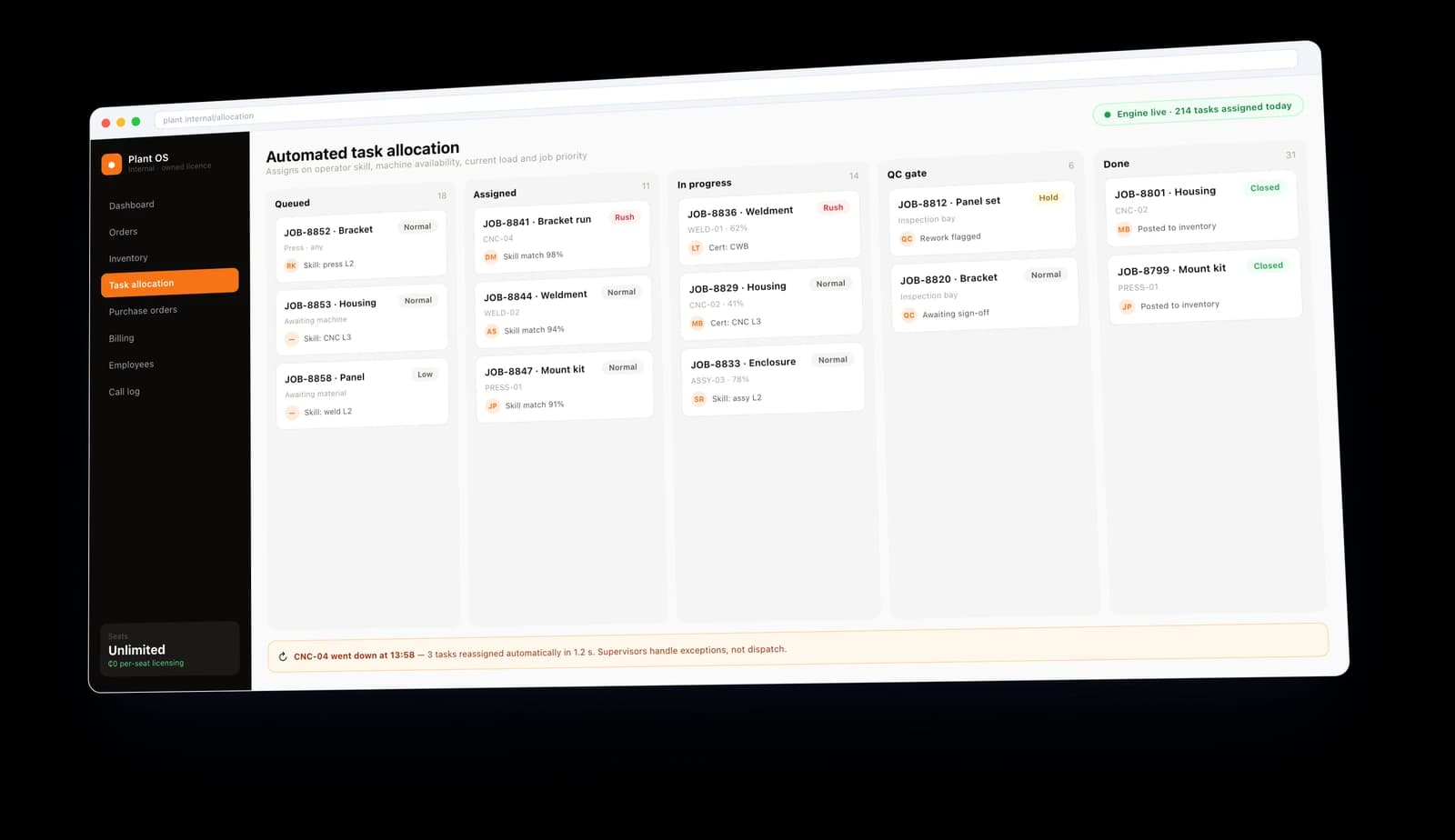
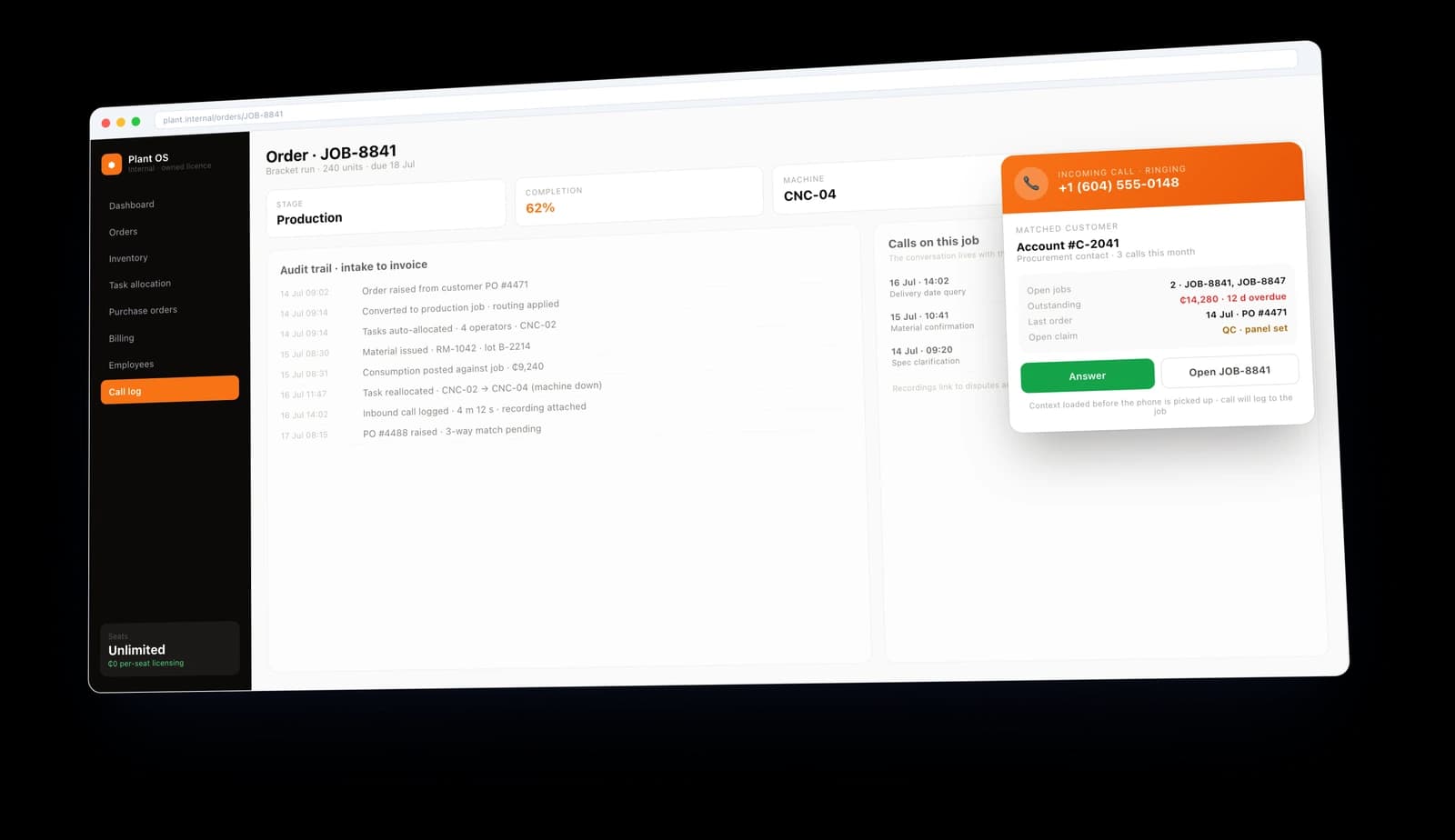
A ground-up internal management platform. Employee management covers role-based access, shift and attendance tracking, and skill and certification mapping, with performance measured by output rather than hours logged. Orders convert into production jobs with routing, due dates and dependencies, carrying a full audit trail from intake to invoice. Inventory tracks raw material, WIP and finished goods in real time, with reorder thresholds firing automatic procurement triggers, batch and lot traceability, and consumption posted automatically against jobs. The piece that changed the most is automated task allocation: tasks assign themselves based on operator skill, machine availability, current load and job priority — replacing a supervisor's memory and a whiteboard — and reassign on the fly when a machine goes down. Purchase orders run through a multi-level approval matrix matching the real authority chain, with GST/HST-compliant invoicing and three-way matching between PO, goods receipt and invoice before payment release. The differentiator is VoIP integration: inbound calls surface the caller's order history, open jobs and outstanding invoices before the phone is picked up, click-to-call works from any record, and call logs and recordings attach to the relevant order — so the conversation lives with the job, not in someone's memory.
The product in action
Representative interface — rebuilt from the shipped product, with client data and branding withheld under NDA.
Ready to build something like this?
Let's talk about your project and how we can bring it to life.