3D Signage Customization Software for a PAN-India Multi-Vendor Marketplace
A WebGL configurator that lets buyers design a neon sign, pylon or name plate in 3D — then routes that exact spec to a verified vendor in their own city.
The signage industry in India still runs on WhatsApp threads, hand-drawn references and phone calls. A customer who wants a custom neon sign, an acrylic name plate, a lollipop sign for a storefront or a highway pylon sign has no way to see the product before it is manufactured. Vendors quote blind, buyers approve blind, and rework, disputes and delivery failures follow. Three problems had to be solved at once: non-designers needed to configure material, size, mounting, illumination, font and colour and see the result render live; hundreds of vendors across cities — each with different capabilities, pricing and catalogues — had to operate under one super admin; and every order needed a manufacturing-grade spec sheet so the item that ships is the item that was approved.
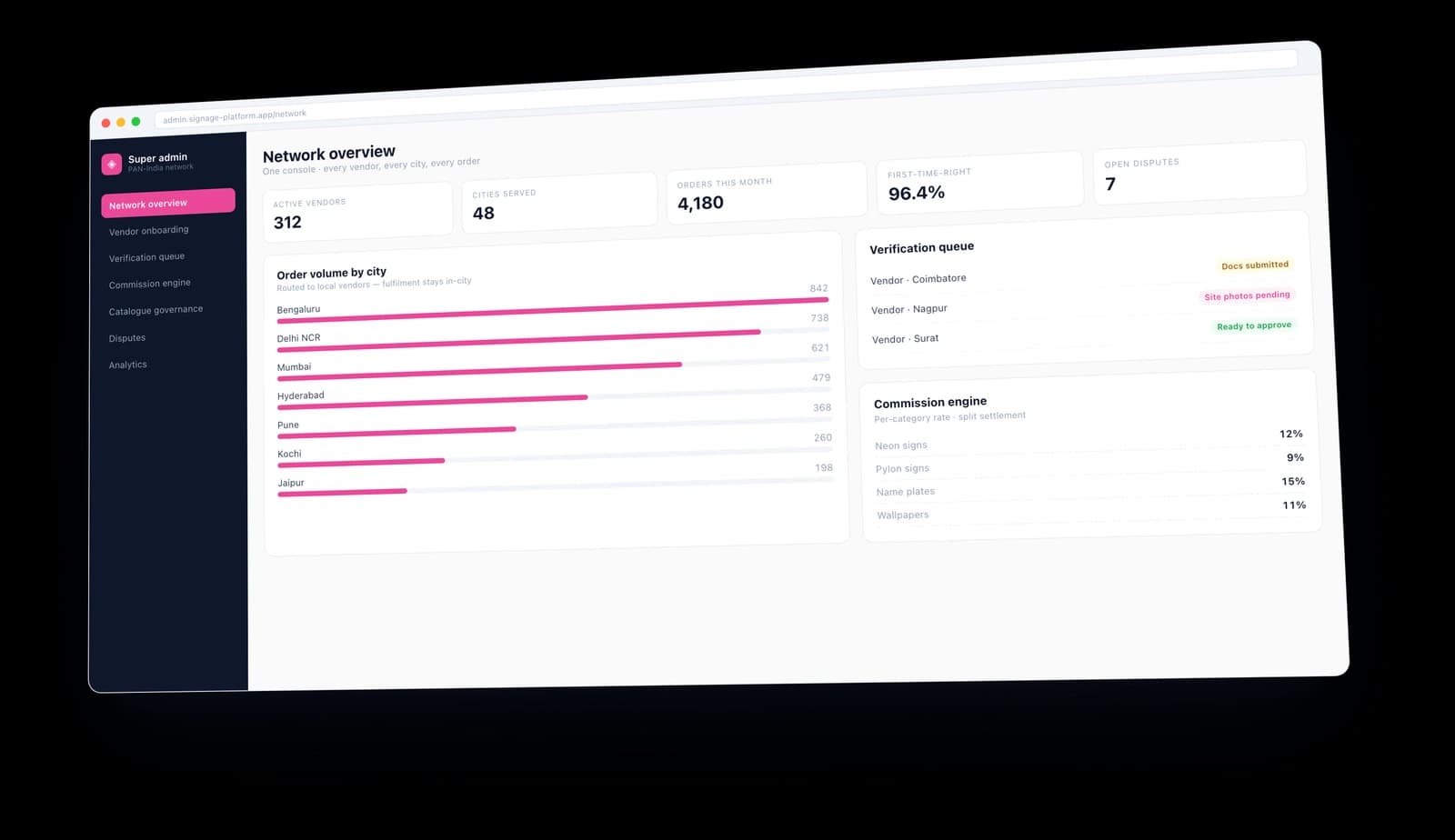
The brief was to let a customer design and actually see their signage in 3D before paying, then route that exact specification to a verified vendor anywhere in India with nothing lost in translation. We designed the configurator first and worked outward from it — treating the 3D spec, not the screenshot, as the contract between buyer and vendor. Around it we modelled three role-based surfaces on one system, and a routing engine that matches orders to vendors by geography, product capability and current load.
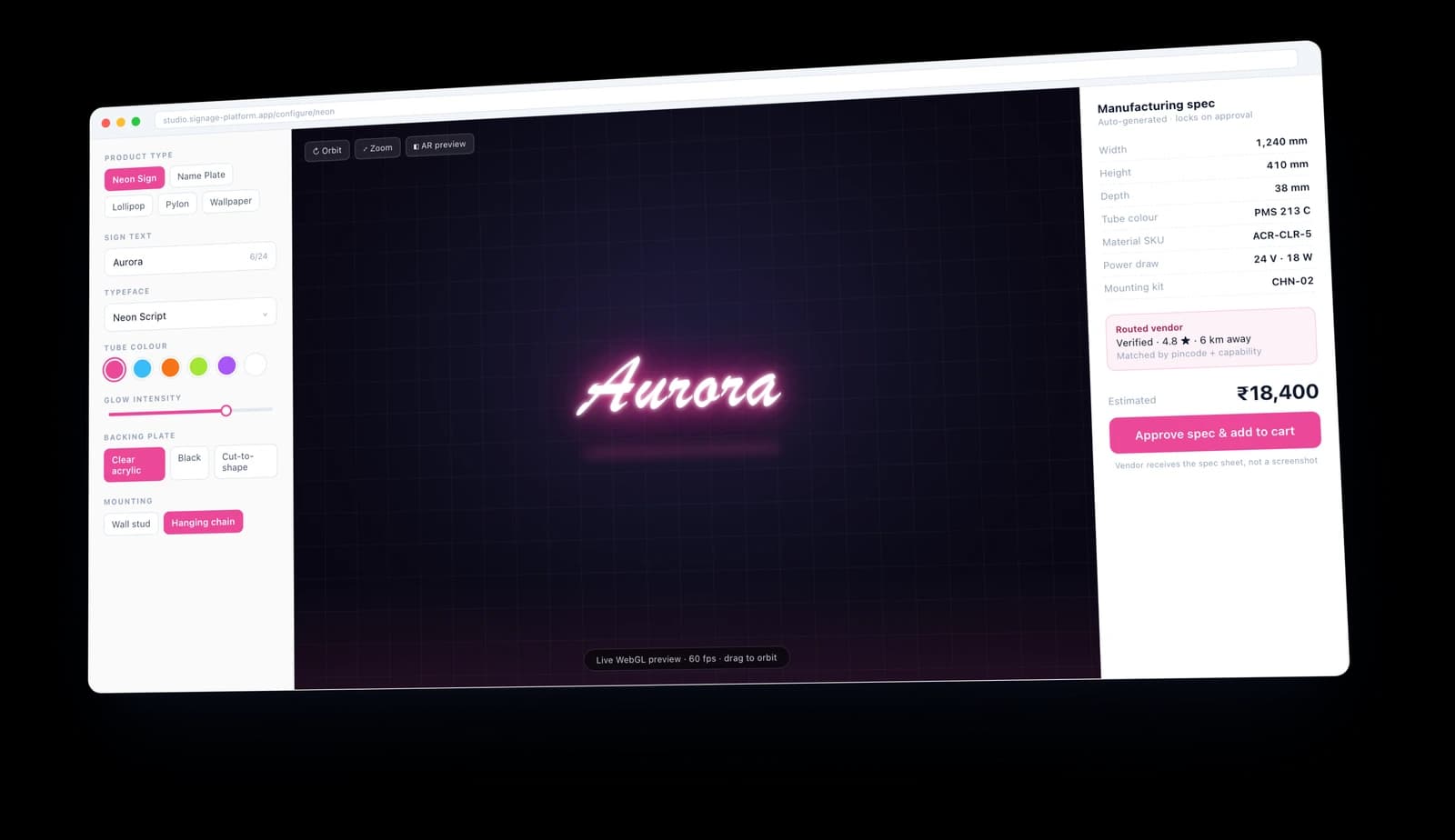
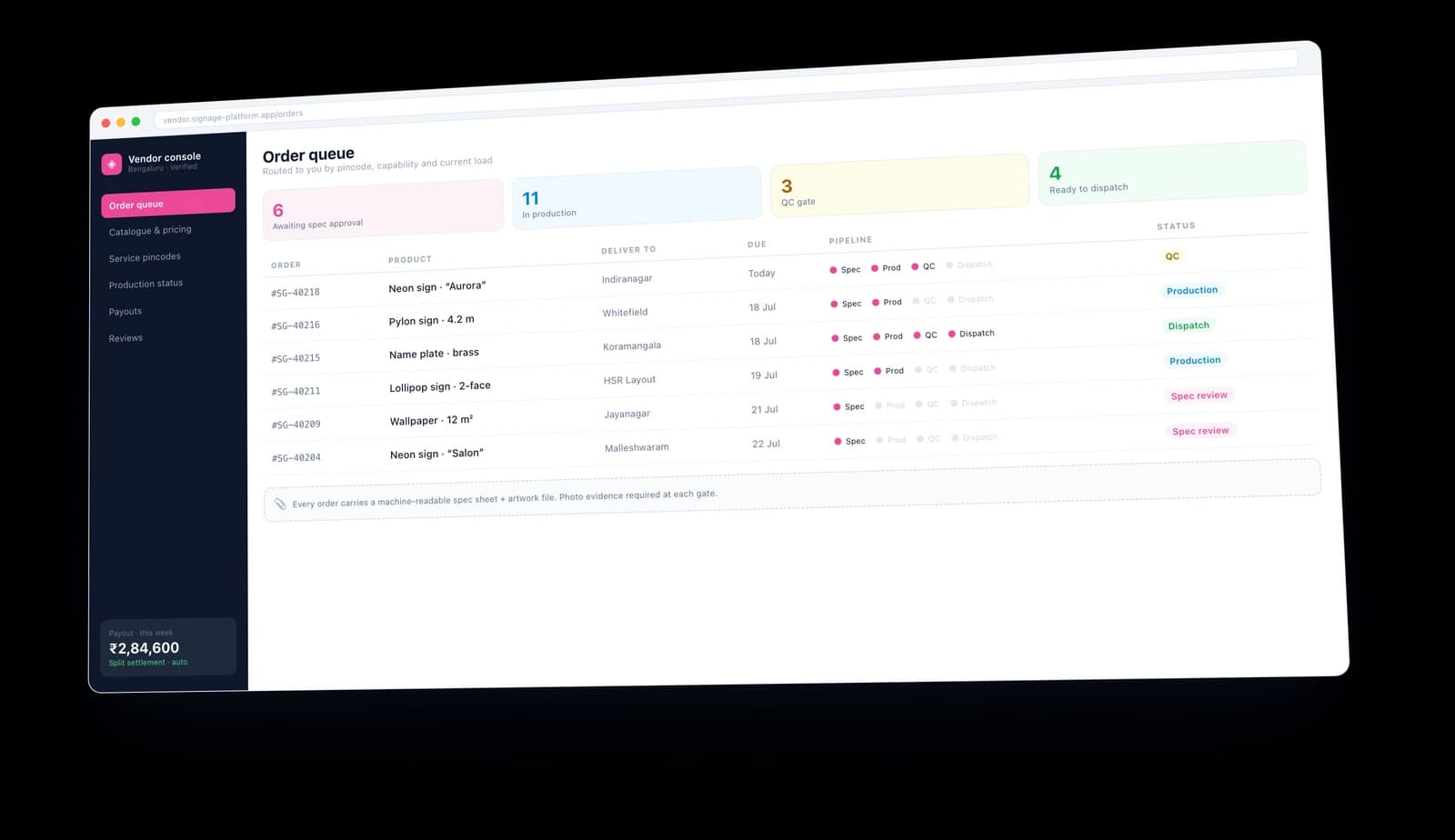
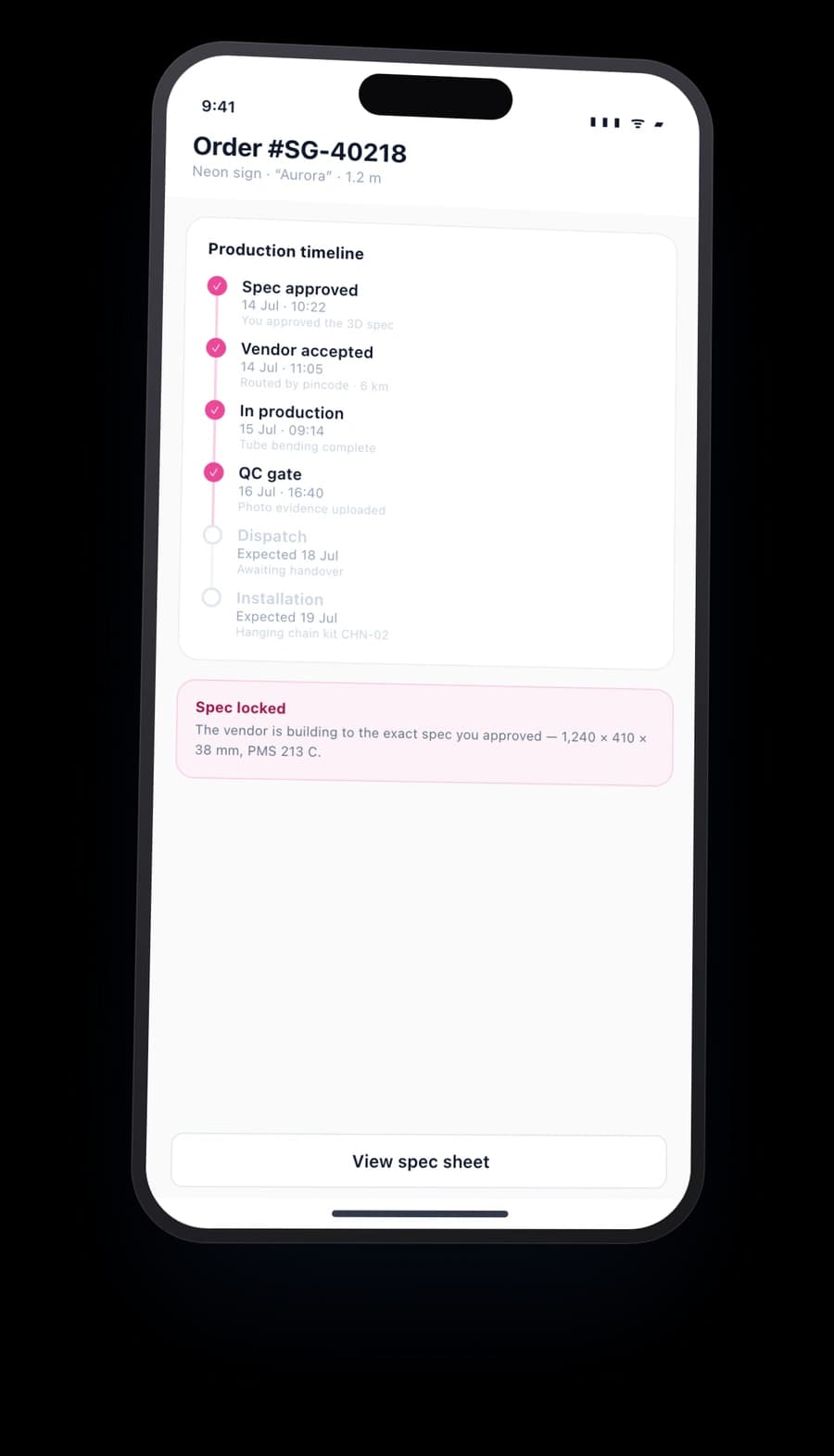
A multi-vendor signage SaaS platform with a real-time 3D product configurator at its core. A WebGL visualization engine lets users build signage live — type a business name and watch it extrude into 3D, tune neon glow intensity and tube colour, set pylon pole height and panel dimensions, swap name plate materials between acrylic, brass, steel and wood, or tile wallpaper against a live room preview — orbiting and inspecting from any angle before adding to cart. Buyers who don't want to start from scratch browse a curated pre-designed catalogue instead. Each configured product generates a machine-readable manufacturing spec sheet: dimensions to the millimetre, exact colour codes, material SKU, mounting hardware, power requirement and artwork file. Vendors receive that spec, not a screenshot, and the order portal tracks every stage from spec approval through production, QC and dispatch to installation, with photo evidence at each gate.
The product in action
Representative interface — rebuilt from the shipped product, with client data and branding withheld under NDA.

The app, up close
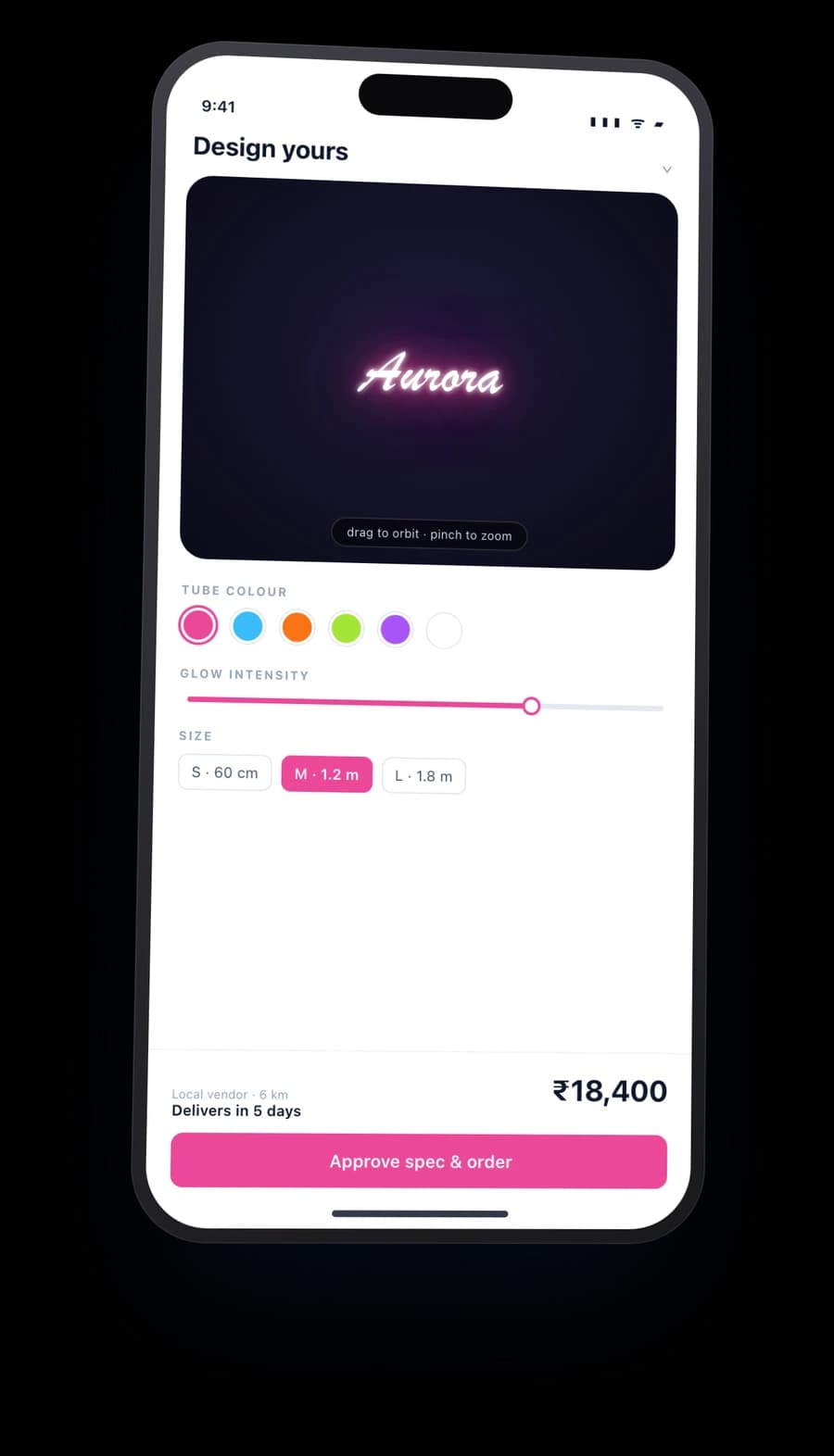
Representative app flows — every screen tuned for real use, identifying detail withheld under NDA.
Ready to build something like this?
Let's talk about your project and how we can bring it to life.